
Website for beekeepers
Website for beekeepers
A beekeeper's website lets people buy your honey, learn where it comes from and find the shops and markets that stock it. Atelier Web built the webshop for Miel d'Enghien, run by beekeeper Henry Nolf in a family tradition of a hundred years, and writes sites in English, Dutch and French.
What we hear
- Customers love your honey at the market but cannot reorder once they get home.
- People search for local honey and find supermarket brands that look local.
- Shops and delicatessens that might stock your jars do not know how to reach you.
- Each harvest is different, and there is no place to explain why the spring honey tastes the way it does.
- Gift orders around the holidays come by phone and text and are easy to mix up.
What should a beekeeper website contain?
The honey first, with a way to buy it. A small webshop with your honeys by season or flower, comb honey if you have it, and a gift set or two. Each product gets a photo of the real jar, a description of the taste, and the size.
Then the bees. Where the hives stand, which flowers are around them, what a good or poor year looks like. Miel d’Enghien leans on a family tradition of a hundred years; that kind of history gives the jar its meaning.
Add a page with the markets, farm shops and delicatessens that stock you. Customers who first tasted your honey at a market will look for it. Shops looking for a local supplier will also find you there.
Finish with practical questions: why honey crystallises, how to store it, whether it is suitable for small children. Those answers save you explaining it at every stall.
How do customers find a beekeeper online?
Most people search for the product, not the beekeeper: “local honey”, “raw honey Brabant”, “honey gift box Belgium”. Some search for the place they bought it: “honey Enghien”. A site that names your honeys, your area and your points of sale in plain text matches those searches.
Your Google Business Profile helps if customers can come to you, for example at a farm shop or an open day. Reviews from happy customers carry weight in a product people buy on trust.
AI assistants answer questions like “where can I buy honey from a local beekeeper near Halle” or “Belgian honey gift for a colleague”. They recommend producers whose sites describe products, origin and how to buy in clear sentences, so write the page the way you would explain it at your stall.
How does Atelier Web build a beekeeper website?
It begins with your email or call. Louis wants to know which honeys you sell, how many jars a season produces, where you sell them and whether shipping is realistic for you.
A quote follows; for most beekeepers it covers a small site with a webshop for a handful of products, a page on the bees and a list of points of sale. Once you agree, Louis visits your apiary or market stall to see the hives and photograph the jars. For Miel d’Enghien, run by beekeeper Henry Nolf, Atelier Web built a webshop.
Louis writes the copy from your interview and you correct it. Sites are built in Dutch, French or English.
What does a beekeeper website cost?
You get a quote after your first message. The cost depends on the number of products, whether you ship or only offer collection, online payment, gift options, extra languages and photography of jars and hives.
The quote includes design, copy, the build, the shop setup and a handover so you can add a new harvest yourself. Your customer data stays with your shop, not with a platform.
Should a beekeeper ship honey or offer collection only?
Collection is simple: the customer orders, picks a day and comes to your door or market stall. No packaging, no breakage, no shipping cost to explain. For a small beekeeper with a loyal local following, it is often enough.
Shipping opens the shop to the whole country and to gift buyers, but glass jars need proper packaging and you need time to post them. Many beekeepers start with collection and add shipping once they see demand. Tell Louis how many jars you sell and where, and the quote will match that choice.
Work
Sites built for beekeepers
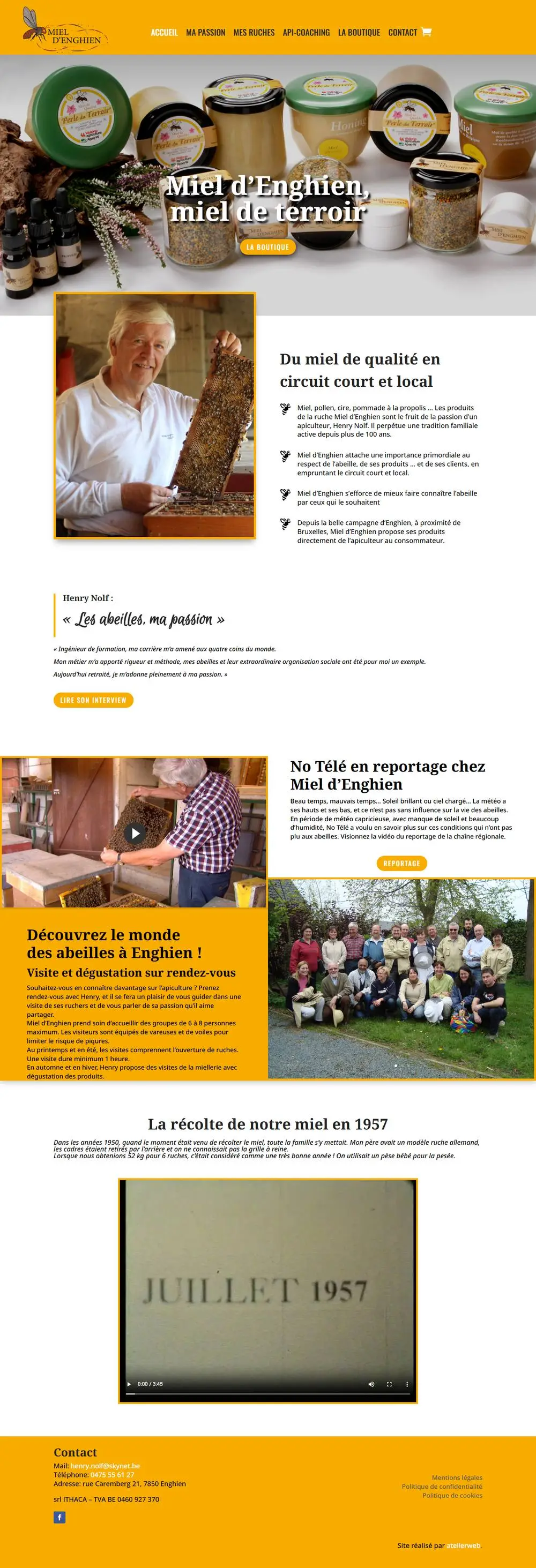
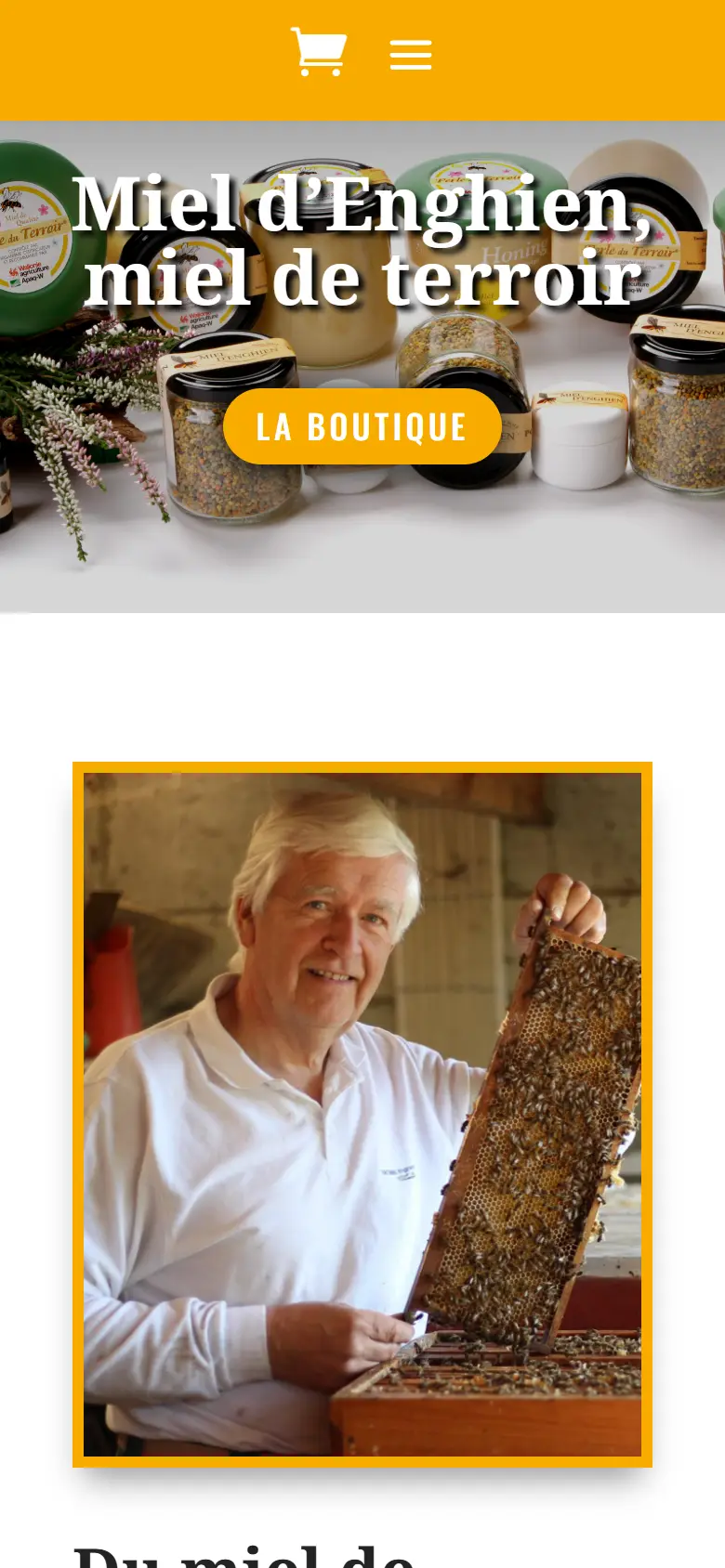
Web shop for Miel d'Enghien, the honey of beekeeper Henry Nolf in Enghien, who carries on a hundred-year family tradition.
03Frequently asked questions
Questions beekeepers ask about their website
Can a small beekeeper sell honey through a website?
Yes. A webshop with a few products and simple shipping or collection is enough. Miel d'Enghien sells its honey through a webshop built by Atelier Web.
What should a beekeeper put on their website?
Your honeys and how to buy them, the area where your bees fly, the people behind the hives and where else your jars are sold. Add answers to common questions about crystallisation and storage.
Should I show which shops stock my honey?
Yes. It helps customers find you between orders and shows other shops that you already supply retailers. Keep the list short and up to date.
Do I need my honey website in English?
If you sell to tourists, expats or across the language border, it helps. Atelier Web works in English, Dutch and French, so one or two extra languages are routine.
Do I have to do updates or backups myself?
No, that is part of the maintenance package. Updates, backups and security happen behind the scenes, so your site stays safe and fast.
Request a quote
Request a quote for a beekeeper website
Louis replies within 24 hours, with an honest proposal shaped to your business. No sales pitch, no obligation.